
Atlanta, 1968–1972: Trying to Feel What the Child Felt

The Sky Was My Only Limitation

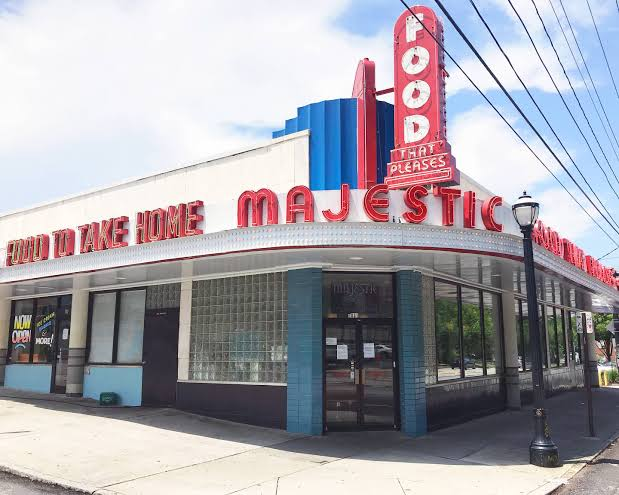
I’m sitting in a Starbucks on Moreland Avenue, just a few blocks from the Hotel Clermont and not far from Plaza Theatre and The Majestic Diner. I’m listening to YouTuber Elizabeth Zharoff analyze Bob Seger’s Turn the Page. I find it interesting that, while she doesn’t go into great detail, she’s mentioned working on her mental health. As she listens to the song, artist to artist — she’s a trained and performing opera singer — she can feel his pain as he sings. I think that matters to me because music has always worked that way for me too. When a song emotionally grabs hold of me, I’ll often put it on loop over and over, not just to hear it, but to let the emotion fully wash over and through me until I’m no longer simply listening to it but inhabiting it.
I suppose that’s what I’m doing sitting here now in Atlanta. The song, her analysis, the neighborhood itself, the memories attached to these streets — all of it feels like it’s slowly lowering me back down into emotions and memories I’ve spent much of my life circling around intellectually rather than fully stepping inside of emotionally.
Why am I here in Atlanta, in my old stomping grounds? I lived in this neighborhood from around 1968 to 1972, and I often say this period was both the best of times and the worst of times for the boy I was between the ages of eight and twelve. I say it was the best of times because, well, childhood. There was an innocence only a child can have. That innocence allowed me to smile and feel happy. There was nothing inside me — nothing in my small, undeveloped intelligence or childhood emotions about me, myself, and I — that wasn’t free and unchained. The sky was my only limitation.
As I’ve said before when talking about my April birth month during those years, I often felt the sun itself was my friend. While I didn’t know how far away it was, I knew that no matter how high I jumped, I’d never be able to touch it. So when I say the sky was my only limitation, that truly meant something.
There could be those bright blue skies in my part of Atlanta, and they were almost always welcomed by me. Endless blue skies and the beauty they represented filled me with a kind of warmth and emotional freedom that made me feel safe, open, and happy simply to be alive. Those skies felt alive to me in a way I still struggle to fully explain. They represented freedom, warmth, possibility, and something emotionally safe. Looking back now, I think those blue skies often felt like the emotional opposite of fear itself. They allowed me to simply exist as a child without apprehension or dread weighing me down. In those moments I felt emotionally open to the world around me, and there was a happiness in that openness that still feels very real to me even now.
But if those were some of the best times of my childhood, there were also moments during those same years that became some of the worst.
Blue Skies and Thunderstorms
As beautiful and alive as those years could sometimes feel to me, there were other moments living alongside them that were filled with fear, confusion, uncertainty, dread, and emotional loneliness. Even as a child, those two emotional worlds often existed side by side inside me.
In Atlanta, afternoon thunderstorms can appear out of nowhere. I could feel the serene happiness spreading itself everywhere above me through those blue skies until suddenly it didn’t. Clouds, from gray to coal black, would rumble in like an uninvited stranger. They would take over and erase the blue skies. I would watch their billowing waves churn and rumble as though they couldn’t stay still because of pure anger. They represented the apprehension of how they made me feel. Why were they here? Why did they make me feel too uncertain to smile or feel happy? Was I sad? I’m not sure. But they caused me to think and wonder why they had wandered into this part of Atlanta’s sky.

Looking back, I realize this was only true because I was a child, but the raindrops seemed as big as golf balls. I could watch individual drops fall until they struck the ground. Kids are funny, though, because those storms could take me in two completely different emotional directions. If I was allowed outside to play in the rain, the enormous drops felt wonderful. They made me laugh and smile huge smiles as they exploded against my body, especially once the rain began falling harder and faster. I would become lost in the joy of the interaction. I suppose it made me feel ecstatic. And I seem to remember feeling there wasn’t much separation between me, the child Tod, and the black rumbling clouds and furious falling rain. While I didn’t have the vocabulary for it back then, I know I felt — and somehow rationalized — that the rain, the sky, and I were all one and the same, or perhaps existed in some kind of symbiotic relationship. More than anything, what mattered was how happy I was. I was so overwhelmed with joy that I felt like I could crawl out of my own skin.
But being Atlanta, those coal-black clouds swallowing the sun usually also meant overwhelming thunder. Sometimes the thunder simply made me wonder where all that power came from, and it left me contemplative. But there were also times, especially early on, when it terrified me. It made me wonder if my life was in danger. The thunder reminded me of bombs, cannon blasts, and the ravages of war. As the sound moved closer and closer, I would wonder if an explosion would eventually land on me and my family. Would it kill me? My heart would beat faster and faster. Fear would spread through every part of my body. If my mother tried to ask what was wrong, what was happening to me, or even tried to reassure me, I would scream in fear and reject anything she said out of hand.
Learning to Fear My Mother
Sitting here now, I feel as though I’m beginning to understand why my mother’s reassurance did nothing to calm me. I have to wonder where so much fear could literally overwhelm me as a simple child. Look at my words. I was terrified, and everything I felt seemed real and deeply threatening. Had I already seen enough war movies by that age? I mean, how else was I aware enough to equate thunder with bombs, cannon blasts, and war itself? Obviously, by then I must have seen plenty of war movies. That much has to be true. But the larger question is this: why was it impossible for my mother to comfort me?
This part has to be understood before much of anything else I’ve written — or will continue to write — can truly make sense. You see, I had already learned to fear my own mother. More importantly, I had learned she was not a harbor of safety, understanding, trust, comfort, or protection. She was not someone I could safely confess things to or emotionally lean on.
I was maybe three or four years old when I remember locking my mother out of the house after she had stepped outside to retrieve something. To me, it was harmless — a silly little thing a child might do. At first I laughed. But when she returned to the door and couldn’t get back in, everything changed. My laughter quickly turned into fear as she began banging on the door and yelling through it that she was going to beat me. And this is what I have to wonder about now as an adult: how was I so terrified at such a young age that, when she threatened to climb through the windows, I immediately ran from window to window locking them so I could protect myself from her anger? Why did I already know what was coming? Eventually she got in through a window anyway and proceeded to mercilessly beat me. How did I already know this was going to happen? Why did I instinctively know I needed to lock those windows? While I’m too young to consciously remember the answer, I can only conclude I must have already experienced similar things at her hands many times before.
As an adult, I now understand my mother had little emotional regulation. And I feel the need to look back at her with at least some grace, knowing that until fairly recently I also struggled deeply with regulating my own emotions. That said, there’s another reason why, during those Atlanta thunderstorms, my mother could not reassure me. Around first grade, while living in Evansville, a boy about three years older than me who lived next door abused me. I’ve written about that before, so I won’t rehash it here. Suffice it to say, my mother confronted the boy’s parents while I stood between them as both sets of adults fought over me, each trying to pressure me into validating their version of events. “He did.” “He didn’t.” Because I couldn’t satisfy either side — because nothing resolved itself through my terrified confusion — my mother later beat the hell out of me because, in her eyes, I had humiliated her.

That taught me something devastating. Not only did I feel like I was somehow a horrible boy, but I also learned my mother was not on my side. She was not someone who could protect me. In many ways, she herself had become another source of fear. So why couldn’t my mother reassure me when those thunderstorms felt no different to me than a war filled with explosions that might kill me and my family? Because psychologically, she herself had already become part of the danger. Even if I didn’t consciously bring those memories to the front of my mind, they remained buried somewhere inside my young subconscious, shaping the way I moved through the world and the way I experienced fear itself.
The Walk to 7-Eleven
I think that’s part of why those nighttime walks to the 7-Eleven felt so overwhelming to me. They weren’t just errands or childhood chores. They felt like journeys through uncertainty, vulnerability, dread, and the terrifying possibility that something bad could happen at any moment.
It always began the moment I stepped outside.
Even before I started walking, I could feel the dread building inside me. I had to cross the street first, and somehow even that felt frightening. Looking back, there probably wasn’t much traffic, but that almost doesn’t matter. The fear had very little to do with traffic itself.
The darkness felt alive to me.
Not just dark, but alive — like some kind of entity that could swallow me whole if I wasn’t careful. In my imagination, the darkness itself was a monster. Monsters are mean, horrible, hideous things, and it was scary.
As I walked down the sidewalk toward the 7-Eleven, I looked at the houses and apartment buildings around me and wondered what was hidden behind the doors and windows. Mostly bad things. My imagination filled those houses with danger and mystery. Somehow, even at that age, I understood this wasn’t the best neighborhood, although most of the time I had loved ones nearby who kept me from feeling afraid. But now I was alone, and in my little mind I believed bad people lived nearby.
At any moment, I felt someone could step out from the shadows and attack me, kidnap me, or kill me.
Nothing had to actually happen.
The possibility alone was enough to terrify me.
The feeling of being alone and defenseless meant I had to constantly look around and observe everything around me, but I never had a plan. The only thing I knew to do was put one foot in front of the other and hope. Hope that nothing bad would happen. Looking back now as an adult, I realize hope was all I actually had because there was nothing else I could do if any of my fears came true. That’s what made it so terrifying.
Anyone bigger than me could have done whatever they wanted to me, and I had no idea what that might be. My mind filled with gigantic dread and fear of unknown possibilities. I felt so small, so alone, and so afraid. And this wasn’t just happening in my thoughts. I remember those feelings living in every cell of my body. My heart had to be racing. My breathing had to be fast and nervous. I was probably sweating while trying to make myself keep walking forward through all that fear.
Cars passed by, and even they frightened me. I didn’t know who was inside them or what they wanted. Every passing car felt dangerous simply because I didn’t know.

Then there were the spiderwebs. I hated them. The trees hanging over parts of the sidewalk terrified me because webs stretched invisibly between the branches. That’s why I carried a stick and waved it in front of me while I walked. I was trying to break the webs before they touched my face or body. Their stickiness horrified me. If I walked through one unexpectedly, I would panic and immediately try to wipe it off me as fast as possible. But the awful thing about spiderwebs was that no matter how much you wiped, they never fully felt gone. You still felt traces of them clinging to your skin, your face, your hair.
Looking back now, I think I realize the webs terrified me so much because the darkness hid them from me. They were invisible until suddenly they weren’t. Somewhere deep inside myself, I think those spiderwebs represented all the hidden dangers surrounding me.
As long as I avoided them, fear stayed fear. It stayed possibility. Something I could hope against. But if I crashed through one and it suddenly covered me, if it clung to my face and body, then the fear had become real. It was no longer imagination anymore. It was no longer “what if.” It had happened.
And honestly, I think if I had kept crashing through those webs over and over, I might have emotionally collapsed from it. Not because of the web itself, but because the thing I feared would have become reality right there on my body, sticking to me, clinging to me, and feeling almost impossible to completely wipe away.
That’s why the stick mattered so much to me. The stick was my way of preventing fear from becoming real. I could wave it in front of me and stop at least one invisible danger before it touched me. But outside of the spiderwebs, I had no stick for the other fears surrounding me. I had no protection against strangers, darkness, or whatever might suddenly emerge from behind those doors and windows.
Against those fears, all I could do was hope they never became real.
And deep down, I think I already knew that if they ever did become real, it would be far more terrifying than crashing through a spiderweb.
I wasn’t taking this walk because I wanted to. I had been sent. This was a job. A chore. A mission. A quest. Whatever you want to call it, it was something I was expected to

complete. And it was my mother sending me — the same mother who became a banshee when I locked her out of the house as a toddler, the same mother who punished me after the neighbor boy abused me because I had humiliated her in front of his parents, the same mother who could not reassure me during severe thunderstorms because somewhere deep inside I had already learned she was not emotional safety. So I became a dutiful little soldier. I put one foot in front of the other and kept walking through dread, anticipation, hypervigilance, loneliness, apprehension, fright, fear, and uncertainty toward the store.
Eventually, I would near the top of the small hill where the 7-Eleven sat, and finally seeing it come into view brought an enormous sense of relief. For a moment, it almost felt like safety.
But walking through the doors of the 7-Eleven was never really the end of the journey.
Now I had to find what my mother wanted.
I would walk the aisles hoping they carried it, hoping it wasn’t out of stock, hoping I hadn’t somehow overlooked it sitting right in front of me. Because by then I already understood something about my mother: emotional regulation was not something she possessed. At any moment she could erupt into yelling, screaming, rage, and accusations.
And if I unknowingly brought home the wrong thing, forgot something, or failed to notice what she had actually wanted, I knew what could be waiting for me emotionally once I returned home.

That also meant there was always the possibility she would send me back out into the darkness to do the entire thing over again. And that terrified me because the walk home held all the same fears and misadventures that had accompanied me on the walk there. The darkness was still there. The houses were still there. The strangers were still there. The spiderwebs were still there.The fear was still there.
And somewhere waiting at the end of it all was the possibility that I had still somehow failed.
By Fifth Grade
By fifth grade, another kind of fear and confusion had already begun shaping the way my mind worked, although back then I had absolutely no language for it. Looking back now, I understand this was part of the CPTSD already taking root inside me long before I ever knew such a thing existed. Living in prolonged fear, hypervigilance, emotional instability, and uncertainty had already begun affecting my ability to concentrate, retain information, and emotionally regulate myself, although as a child I didn’t understand any of that. I only knew school and homework often left me feeling overwhelmed, ashamed, confused, and intellectually defective.
School itself often felt impossible to me in ways I couldn’t explain. I had trouble remembering simple things, like bringing the correct textbooks home for homework, and even when I did remember, the assignments themselves often felt strangely unfamiliar to me, almost as though whatever had been taught earlier in the classroom had somehow disappeared from my mind by the time I sat down at home. It wasn’t that I wasn’t trying. It wasn’t that I didn’t care. And it certainly wasn’t that I wanted to fail. But the moment I sat there staring at the pages, confusion and frustration would begin swallowing me whole.
The Boy on the Balcony

I remember times when my mother and her boyfriend would go outside while I remained alone inside the apartment with homework spread out in front of me. My mother would tell me I had to stay inside until the homework was finished. I wasn’t allowed to watch television, and I wasn’t allowed to go outside with them. So while they were outside talking, laughing, playing, and living life together, I sat alone at the table struggling with schoolwork that often felt impossible for me to emotionally process. The harder I tried to understand it, the more overwhelmed and defeated I became. I wanted so badly to do it correctly. I wanted so badly to finally understand. I wanted to be smart enough, capable enough, good enough to finish it and go outside where the people I loved were.
But instead, I would sit there feeling trapped, ashamed, stupid, emotionally overwhelmed, and increasingly convinced there was something deeply wrong with me.
Sometimes the sadness and loneliness inside me became almost unbearable. I remember walking out onto the third-floor balcony outside the apartment door and looking down at them below me. I could see my mother and her boyfriend outside laughing and playing while I stood up above them alone.
And at least one time, what I saw hurt me in a way that still emotionally devastates me even now as an adult trying to revisit these memories honestly.
They were not only outside together.
They were outside playing with other children while I stood there looking down at them from that balcony feeling completely left behind emotionally. I cannot fully describe how badly that hurt me as a child. I think part of what made it so devastating was that even after everything I had already experienced with my mother — the fear, the confusion, the emotional instability, the punishments, the walking on eggshells around her moods — I still loved her desperately and needed her love more than anything. I wanted to feel chosen by her. I wanted to feel wanted by her. I wanted to feel like I mattered enough that she would look up toward that balcony, see me struggling, and want me down there beside her instead of standing alone above her feeling forgotten.

But that is not what I felt standing there. What I felt was unwanted. I felt emotionally abandoned. I felt invisible. felt like I did not exist in their hearts or minds the way those other children did. And because I was only a child, I could not understand trauma or emotional neglect or the psychological damage caused by living in fear and hypervigilance. I only knew how all of it felt inside me emotionally.
And what it felt like was this:
if I had simply been smart enough to do my homework correctly, if I had been capable enough to understand it, if I had not struggled so much, then maybe I too would have been outside laughing and playing with the people who were supposed to love me.
Instead, I stood there on that balcony feeling like I was fundamentally defective and emotionally unworthy of love itself.
The Longing to Be Chosen
And I suppose that is what this trip back to Atlanta has really been about all along.
Not nostalgia. Not simply remembering old streets, thunderstorms, apartment buildings, or walks to the 7-Eleven.
It has been about trying to step back inside the emotional reality of the child who lived here and finally allowing myself to fully inhabit what he actually felt instead of only circling around it intellectually from a safe emotional distance.
Because for most of my life, I think I learned how to survive these memories by thinking about them rather than truly feeling them.
But sitting here now, walking these streets again, listening to the echoes of that frightened little boy still living somewhere inside me, I’m beginning to understand how much of my life was shaped by fear, hypervigilance, uncertainty, emotional abandonment, and the desperate longing to feel safe, chosen, worthy, and loved.

And maybe the saddest part of all is realizing that so much of my childhood became an endless attempt to prove I was worthy of receiving the very love I had needed all along.

Comments